
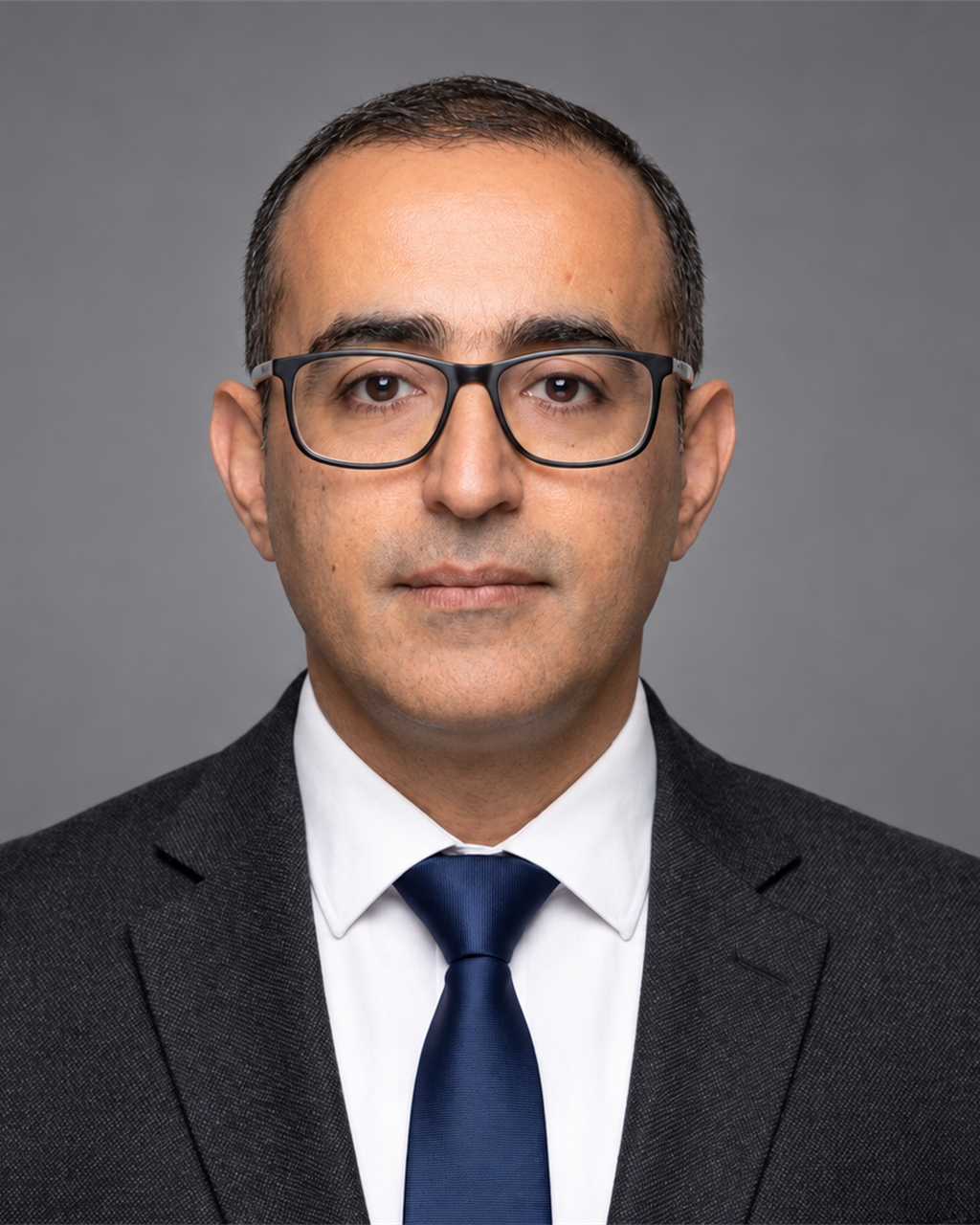
Deepak Malik
Chief Investment Officer & Fund Manager
Deepak Malik serves as Chief Investment Officer & Fund Manager and brings over 20 years of experience across equity research, private equity and fund management. He has expertise in fundamental research, business and financial analysis, due diligence and portfolio management across sectors. As CIO & Fund Manager, he provides strategic leadership to the investment function, with responsibility for investment strategy, portfolio construction, security selection, valuation, portfolio monitoring and investment decision-making. He is responsible for ensuring that investment decisions remain aligned with the investment objectives and approved investment framework of the schemes, while maintaining appropriate portfolio risk, regulatory and prudential limits and robust investment governance.
Roles and Responsibilities for Risk Management — Chief Investment Officer
- Ensure adherence to risk management guidelines and risk appetite framework for schemes.
- Ensure daily management of risk and necessary reporting relating to Investment risk of all scheme(s) such as market Risk, liquidity Risk, credit risk etc. and other scheme specific risks (Compliance Risk, Fraud Risk, etc.).
- Review and provide recommendations for changes to the Investment and other policies such as credit risk policy, liquidity risk policy and governance risk policy and place it with Board for approval.
- Ensure implementation of an integrated investment management system across front office, mid office and back office.
- Ensure investment policies are aligned to the investment objectives as documented in the Scheme Information Document (“SID”).
- Formulate, review and implement a framework for: updation / modification in the equity or debt investment universe; updation in internal investment limits.
- Provide relevant information to CRO regarding the risk reports.
- Quantitative risk analysis (using metrics such as VaR, Sharpe Ratio, Treynor Ratio, Information Ratio, etc.) in consultation with CRO.
- Review portfolio concentration and take necessary actions to make adjustments to the portfolio holding.
- Monitoring risk appetite within the potential risk class of the respective schemes.
- Assessment of the governance risk of the issuer.
- Assessing and monitoring risks of investing in multiple markets.
- Maintenance of all relevant documents and disclosures with regard to the debt and money market instruments before finalizing the deal.
- Ensuring that schemes are managed in line with regulatory requirements.
- Manage and monitor investment risks by conducting: redemption analysis; investor concentration analysis; distributor concentration analysis.
- Ensure adherence to the “Stewardship Code” and other regulatory updates prescribed by SEBI for mutual funds.
- Calculate overall risk by taking into account the weighted average of the risk-o-meter and the events of defaults.
- Ensure periodic reviews and monitoring of the following: activities performed by fund managers with respect to risks identification, risk management, reporting and corrective actions; the adherence to the risk appetite within the potential risk class of the respective schemes; exceptions / breaches to the investment limits, and identify and implement corrective actions; investment risk for new products; adequate due diligence conducted and documented during inter-scheme transfers; broker limits; implementation of controls around dealing room such as non-usage of mobile phones, dedicated recorded lines, restricted internet access and handling of information.
- Monitor exceptions identified on review of the regular risk management activities.
- Review adequacy of disclosures made to the investors regarding significant risks such as liquidity, counterparty and credit (quality of investments made mainly debt based on the credit rating), investment, and other risk areas across all schemes. Ensure disclosures made to clients are consistent with investments and holdings.
- Ensure that fund managers and dealers comply with Code of Conduct as per Schedule V B of Mutual Fund Regulations.
- Define and set internal limits such as: minimum number of stocks/securities; cash (net of derivatives); stocks/securities vis-a-vis benchmark; Beta range.
- Report on the key risk identified and corrective actions taken to the CEO and CRO.
- Define the responsibilities of the Fund Managers.
Key Result Areas (KRAs) for Risk Management — Chief Investment Officer
- Adherence to the SEBI risk Management circular
- Adherence to investment risk tolerance limits
- Compliance with investment limits such as: single issuer limit; group issuer limits; counter party; sector limits; rating linked limits; liquidity limits; asset allocation limits as per SID; internal investment norms; stress testing; market capitalization limits; other internal/ regulatory limits
- Instances where security perfection is pending beyond defined timelines
- Timely implementation of remediation actions plan relating to the investment function
- Instances of fraud, near miss and loss events relating to investment activities resulting in losses
- Instances of breach in dealing room controls
- Timely reporting of risk incidents to CEO / CRO
- Adequate risk reporting to the investors
- Monitoring of requirements prescribed under the stewardship code
- Risk incidents / events beyond the defined thresholds or tolerance limits
- Instances of breach in covenant monitoring and action taken
Roles and Responsibilities for Risk Management — Fund Manager
- Manage investment risk of managed scheme(s), i.e., market risk, liquidity risk, credit risk and other scheme specific risks within approved limits.
- Ensure adherence to Risk Management framework, SID, internal & Regulatory limits.
- Ensure adherence of applicable provisions of Mutual Funds Regulations including Code of Conduct per Schedule V B.
- Adhere to the risk appetite framework of the scheme managed by the Fund Manager.
- Suggest / provide inputs on changes required to risk appetite to CIO.
- Recommend reduction/ change in the risk level of the schemes within the Potential Risk Class (PRC) to the CIO.
- Report identified risk, risk related events and corrective actions plans to the CIO.
- Measure risks in accordance with the approved internal policy and risk metric.
- Periodic analysis of bulk trades and block deals of large values.
- Analysis of Broker Concentration.
- Analysis and evaluation of ratings received from multiple credit rating agencies for securities across portfolios and take necessary actions.
- Ensure disclosures made to clients are consistent with investments and holdings.
- Formulate, review and periodically provide inputs to update the RCSA for key risks and controls.
- Perform and report outcomes of periodic testing of the RCSA to CRO.
- Consult CRO before making any changes in the SOP to enable the RCSA and risk register process.
- Manage and monitor investments in schemes by conducting: quantitative risk analysis using metrics such as VaR, Sharpe Ratio, Treynor Ratio, Information Ratio, etc.; analysis of concentration limits (counterparty wise, group wise, industry or sector wise, geography wise).
- Perform due diligence at the time of buying securities through inter-scheme transfers.
- Ensure maintenance of all relevant documents and disclosures with regard to debt and money market instruments before finalizing the deal.
- Take corrective action for deviations, if required, as per the approved Delegation of Power (DoP).
Key Result Areas (KRAs) for Risk Management — Fund Manager
- Adherence to the SEBI risk Management circular relating to investment activities
- Adherence with investment limits such as: single issuer limit; group issuer limits; sector limits; rating linked limits; liquidity limits; asset allocation limits as per SID; internal investment norms; stress testing; market capitalization limits; other internal/ regulatory limits
- Adherence to the investment risk tolerance levels for the schemes managed by the fund manager
- Timely implementation of remediation actions plan linked to respective fund manager
- Instances of fraud, near miss and loss events relating to schemes managed by the fund manager
- Timely reporting of risk incidents to CIO
- Adherence to DoP
- Adequate due diligence during inter-scheme transfer of securities
- Timely action upon downgrade of securities
- Adequate documentation for debt and money market deals